AI Meditation Scripts: Write Custom Guides That Feel Human
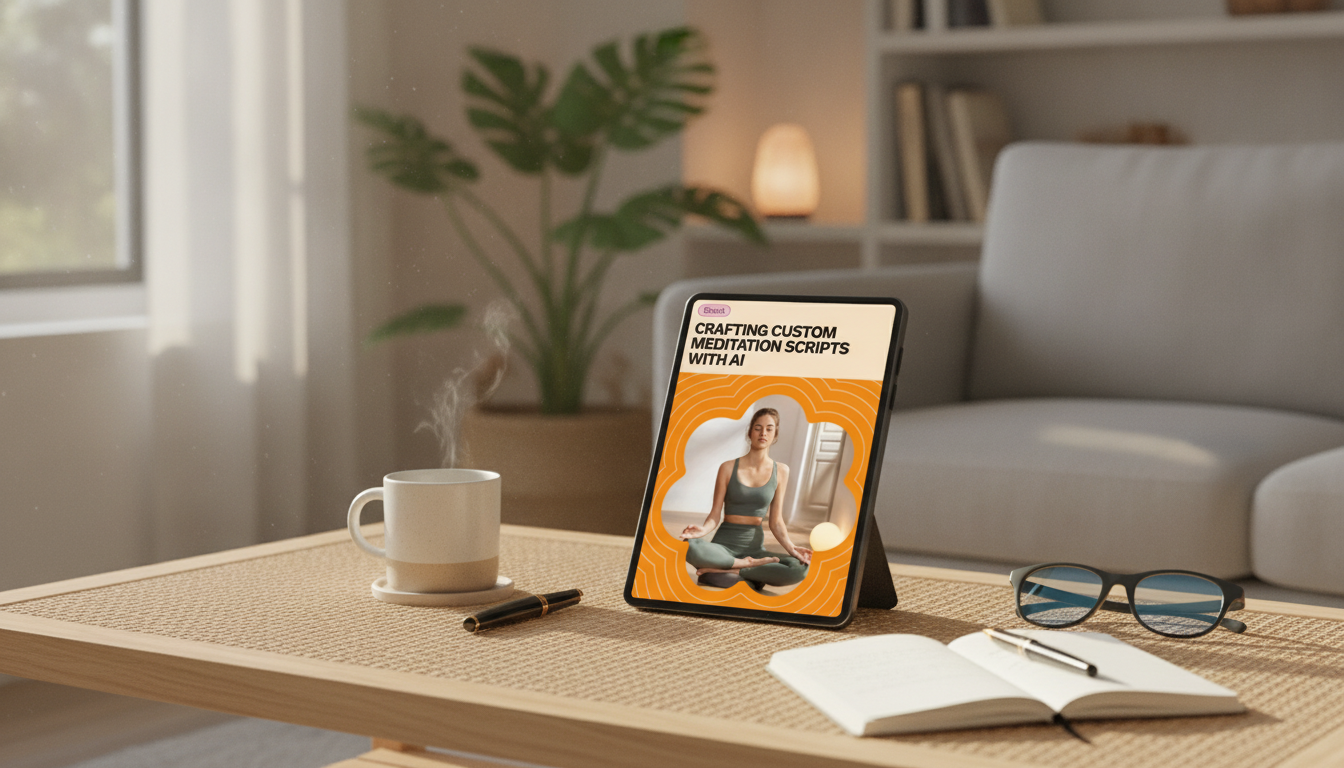
Crafting Custom Meditation Scripts with AI for Personal Practice and Teaching
A good meditation script does more than fill silence—it sets expectations, guides attention, and creates a safe arc from arrival to closing. With AI, it becomes easier to draft multiple versions quickly, tailor language to different audiences, and refine pacing without starting from scratch each time. The key is combining clear human intention (tone, purpose, safety, and structure) with smart iteration: generate, review, edit, test, and personalize. Below is a practical framework for building custom scripts that feel grounded, natural, and adaptable—whether the goal is stress relief, sleep support, confidence building, or a short reset between meetings.
What makes a meditation script feel “custom”
“Custom” usually means the listener feels understood within the first minute. That comes from choices that match real-life conditions, not from fancy wording.
- Match the listener’s context: time available, environment, experience level, and emotional state.
- Use a consistent voice: gentle, neutral, spiritual, clinical, or motivational—without mixing styles mid-session.
- Build a clear journey: arrival → settling → main practice → integration → closing.
- Choose sensory anchors that fit the audience: breath, body scan, sound, visualization, or mantra.
- Avoid vague filler: replace it with specific cues (where to place attention, what to notice, when to return).
If you’re teaching, consistency matters even more: people relax when they recognize your rhythm and know what’s coming next.
A reliable script structure from start to finish
A repeatable framework makes it easier to create multiple scripts without losing quality. You can keep the “skeleton” the same and swap the technique or theme.
- Opening (20–60 seconds): welcome, intention, and a simple invitation to get comfortable.
- Safety and agency: reminders that the listener can adjust posture, open eyes, or stop at any time.
- Settling (1–3 minutes): slow exhale cues, counting breaths, or grounding through contact points.
- Main practice (5–20 minutes): one primary technique; add optional variations for restlessness.
- Integration (1–3 minutes): widen attention, reflect briefly, and connect practice to daily life.
- Closing (20–60 seconds): gratitude, gentle reorientation, and a simple next step.
For meditation safety and realistic expectations, it helps to stay aligned with mainstream guidance on mindfulness and well-being, such as the National Center for Complementary and Integrative Health (NCCIH) overview of effectiveness and safety considerations.
Using AI to draft scripts that still sound human
The fastest way to get usable output is to define guardrails first—then iterate. Think “clarity and constraints,” not “perfect prose.”
- Start with constraints, not inspiration: duration, tone, target audience, reading level, and method (breath/body scan/visualization).
- Ask for multiple options: request 3–5 openings, 3 transitions, and 3 closings to mix and match.
- Control pacing: specify approximate word counts per minute and include intentional pauses (e.g., “pause 10 seconds”).
- Reduce repetition: request varied phrasing for common cues like “notice,” “allow,” and “return.”
- Run a “voice pass”: rewrite to remove jargon, overly poetic language, or anything that feels unnatural when spoken.
One practical approach is to keep a “master draft” and a “spoken draft.” The master draft contains your full guidance; the spoken draft is trimmed, paced, and punctuation-heavy so it reads smoothly out loud.
For a more step-by-step workflow you can reuse, Crafting Custom Meditation Scripts with AI – AI for Creating a Custom Meditation Script eBook is a convenient reference for building repeatable templates and remixable script blocks.
Personalization ideas that change the experience
If you’re writing confidence or “fresh start” scripts, weaving in a simple line of reflection can help. For example, a short quote at the end of a practice can support integration without turning the session into a lecture. Shifting Seasons: Inspiring Quotes That Spark Life-Changing Moments can be useful for gentle closing lines that fit a wide range of audiences.
To stay evidence-aligned while keeping the language approachable, consider the American Psychological Association discussion of mindfulness as a skill that can support stress management and attention.
Script styles and when to use them
| Style | Best for | Key phrases to include | Common pitfalls |
|---|---|---|---|
| Breath-focused | Fast grounding, anxious moments | “Feel the exhale lengthen…”, “Return gently to the breath” | Over-instructing; not allowing silence |
| Body scan | Relaxation, sleep prep | “Notice contact points…”, “Soften the jaw and shoulders” | Rushing through body parts; overly complex anatomy cues |
| Visualization | Confidence, calm imagery | “Imagine a place…”, “Notice colors, sounds, temperature” | Too many details; imagery that may be uncomfortable for some |
| Loving-kindness | Self-compassion, connection | “May I be safe…”, “May others be at ease” | Too sentimental; skipping agency and choice |
| Open awareness | Advanced practice, spacious attention | “Let everything arise and pass…”, “Rest as the observer” | Too vague for beginners; lack of grounding |
Editing checklist before recording or sharing
Turning drafts into a usable script library
Over time, you’ll build your own “signature” phrasing—familiar enough to be calming, varied enough to stay fresh. For additional research-backed context and practical applications of mindfulness, the Greater Good Science Center (UC Berkeley) provides accessible summaries and practices.
FAQ
How long should a meditation script be for a 10-minute session?
A 10-minute guided script often lands around 1,100–1,400 words at a calm speaking pace, but that number should drop if you include intentional pauses and quiet space. If you’re building in several 10–20 second silences, a shorter word count will feel more spacious and natural.
Can AI-generated meditation scripts be used for clients or classes?
Yes, as long as a human reviews and edits the script for clarity, safety language, and appropriateness for your audience. Avoid medical claims, keep the guidance within your scope of practice, and test the script out loud to confirm pacing and tone before sharing.
What should be avoided in guided meditation language?
Avoid commanding phrasing, overly detailed or potentially triggering imagery, promises of cures, and shaming language about distractions. Also avoid abrupt endings—include a gentle reorientation so listeners can transition back to their day safely.
















Leave a comment