Game Day Checklist for Coaches: Calm Prep, Strong Focus
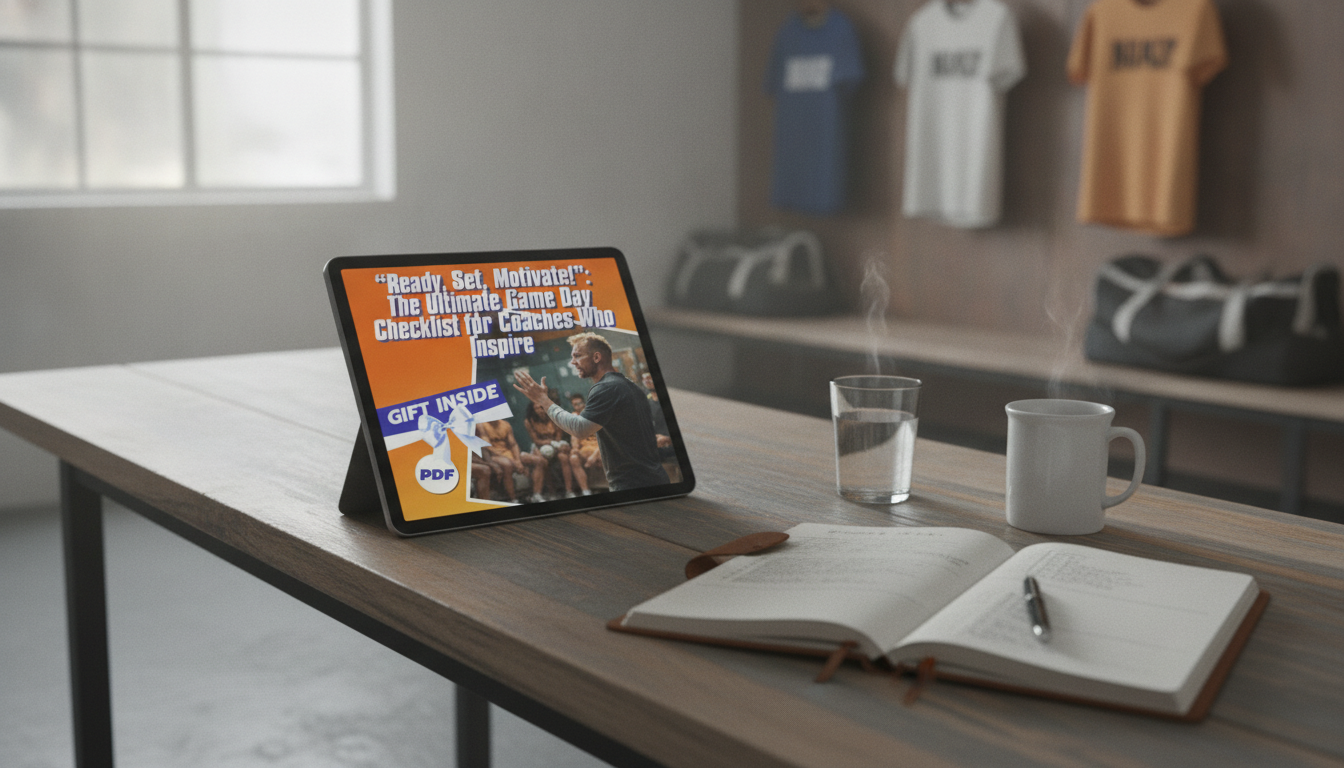
Ready, Set, Motivate!: A Game Day Checklist That Helps Coaches Inspire Confident, Focused Players
Game day goes smoother when the details are handled and the message to players is clear. A checklist-driven approach supports calm preparation, confident communication, and a repeatable pre-game routine that helps athletes feel ready to compete. When coaches reduce last-minute scrambling, athletes pick up on that steadiness—and it shows up in focus, effort, and resilience when the game gets messy.
What Great Game Day Preparation Looks Like
Strong game day preparation isn’t complicated—it’s consistent. The goal is to remove avoidable stress and keep the team’s energy for execution.
- A simple, repeatable routine that reduces chaos and last-minute decisions
- Clear priorities: safety, logistics, mindset, and a team identity for the day
- Communication that is consistent across players, assistants, and parents (when applicable)
- A plan for both scenarios: a fast start and early adversity
Research and applied practice in sport psychology emphasize routines, attention control, and confidence built through preparation—not last-second speeches. For an overview of evidence-informed performance principles, see the American Psychological Association’s sport, exercise, and performance psychology resources.
The Ultimate Game Day Checklist: Before Leaving for the Venue
Leaving late (or leaving unprepared) quietly drains confidence. A tight “before we go” checklist protects the team’s emotional bandwidth.
- Confirm time, location, field/court access, parking, and any entry requirements
- Review roster availability, player health notes, and emergency contacts
- Pack essentials: first aid, hydration plan, game balls/equipment, pinnies, clipboard, lineup card
- Assign assistant responsibilities: warm-up lead, substitutions/bench, stats, equipment
- Set the emotional tone: calm urgency, supportive standards, and team-first language
Quick Pack-and-Plan Checklist
| Category | Must-Have Items | Coach Note |
|---|---|---|
| Safety | First aid kit, ice packs, medical forms | Know who has allergies/asthma; confirm return-to-play rules |
| Hydration & fuel | Water plan, electrolytes (if appropriate), snacks (team policy) | Coordinate with parents/athletic department guidelines |
| Equipment | Balls, cones, pump, jerseys, extra socks/tape | Bring spares for weather and uniform issues |
| Operations | Lineup/sub plan, timer, whistle, notes | Keep cues short; avoid overloading players |
On the safety side, concussion protocols should never be improvised. The CDC HEADS UP hub is a practical reference for concussion education and return-to-play awareness.
Arrival Routine: Set the Environment in 10 Minutes
Arrival is where calm becomes contagious. Ten organized minutes can prevent thirty minutes of distraction.
- Secure a consistent meeting spot for players (bench, sideline, locker room corner)
- Check playing surface and hazards; confirm sideline boundaries and warm-up space
- Handle officials/scorekeeper basics early so athletes stay focused
- Create a “first message” ritual: one sentence that anchors the team’s identity today
- Keep warm-up structure predictable: general movement, sport-specific, then competitive reps
A helpful mindset: players should never have to guess what “ready” looks like. If they’re wondering where to put their bags, who is tracking stats, or whether jerseys are correct, attention leaks away from performance.
How to Motivate Players Before a Game (Without Overhyping)
Motivation works best when it’s specific, controllable, and matched to the group. Overhype can create tight muscles, rushed decisions, and emotional swings after mistakes.
- Use controllables: effort, communication, body language, and next-play response
- Match the message to athlete needs: some need energy, others need calm confidence
- Deliver a short talk with three parts: purpose, plan, and permission to play freely
- Replace vague hype with specific cues (e.g., “win first contact,” “talk early on defense,” “fast transitions”)
- Build belief with evidence: highlight one recent improvement and how it shows up today
If you want a philosophy that supports athletes and keeps standards high, the Positive Coaching Alliance offers practical guidance on constructive communication and culture-building.
A Simple Pre-Game Talk Template Coaches Can Repeat
Players remember what’s short, clear, and repeated. This structure stays steady even when the opponent changes.
- 60 seconds: Team identity (who the team chooses to be today)
- 60 seconds: Game plan focus (two or three priorities, stated positively)
- 30 seconds: Role clarity (what different units/lines need to deliver)
- 30 seconds: Pressure plan (what to do after a mistake; what “next play” looks like)
- Close with one unifying call-and-response or motto to trigger readiness
Keep the language concrete. Instead of “be aggressive,” try: “first three minutes: communicate early, sprint into space, and finish every play with balance.” Specific cues make confidence actionable.
In-Game Reset Checklist: What to Do After a Slow Start or Momentum Swing
Momentum shifts are inevitable; spirals are optional. A reset is less about emotion and more about re-centering attention.
Post-Game Closeout: Turn Today Into Next Week’s Improvement
Digital Download Spotlight: “Ready, Set, Motivate!” Game Day Checklist
“Ready, Set, Motivate!” digital game day checklist download
For a positive, reflective add-on that supports team culture and personal growth through the season’s ups and downs, consider Shifting Seasons: inspiring quotes for growth and change (digital download).
FAQ
How early should a team arrive before a game?
Most teams do well arriving 45–90 minutes early depending on sport and level, with time allocated for setup, a predictable warm-up, brief tactical reminders, and a calm buffer for unexpected issues. The key is protecting a few quiet minutes before competition so players feel settled rather than rushed.
What should a coach say to motivate players right before kickoff or tip-off?
Use a short script: one identity statement, 2–3 controllable priorities, quick role clarity, and a “next-play” reminder. Keep it calm and specific so athletes can execute immediately instead of feeding off emotion alone.
How do you calm nervous players before a big game?
Normalize nerves as a sign that the moment matters, then redirect attention to controllables and role-based cues. A consistent breathing/reset routine and a familiar pre-game ritual reduce uncertainty and help athletes play freer.
















Leave a comment