Flip the Script: 5 Steps to Reframe Negative Thoughts
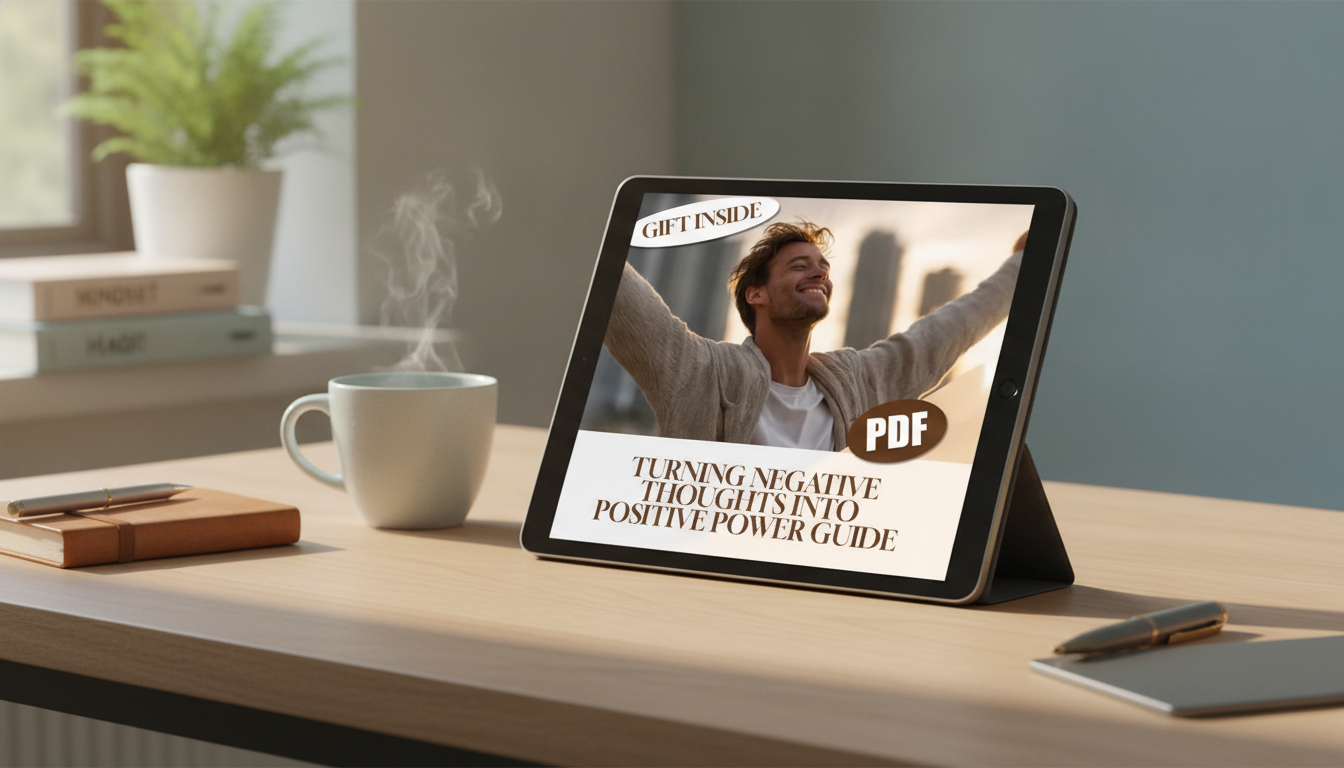
Flip the Script: Turn Negative Thoughts into Positive Power
Negative thoughts can feel automatic—showing up during stress, comparison, or change. The goal isn’t to force constant positivity, but to build a reliable process for noticing unhelpful patterns, challenging them, and choosing responses that support mental wellness and personal growth. Think of it as mental strength training: a few minutes at a time, repeated often enough that your mind learns a new default.
Below is a practical, guide-style approach you can use daily. It focuses on realistic thinking, self-respect, and small actions that restore momentum—especially when your inner critic is loud.
Why the Mind Replays Negativity (and Why It’s Not a Personal Failure)
Humans are wired with a threat-detection system. Negative information can feel more urgent than positive information, even when it isn’t more accurate. That bias can be helpful for safety, but it can also misfire in modern life—turning a tough email, an awkward conversation, or a single mistake into an all-day mental soundtrack.
Common triggers include fatigue, overwhelm, conflict, social media comparison, and uncertainty about outcomes. When your nervous system is already taxed, the mind tends to “scan for problems,” and thoughts can become harsher and more absolute.
It also helps to separate thoughts from facts. Thoughts are mental events—sentences your brain generates. Facts are verifiable realities. “I’m going to get fired” is a thought. “My manager scheduled a meeting” is a fact. Confusing the two is how anxiety gains credibility.
Many people get stuck in rumination loops: a worry thought triggers stress sensations (tight chest, clenched jaw, shallow breathing), and those sensations feel like proof that the thought is true. The loop reinforces itself. A healthier aim is realistic thinking plus constructive action—not forced optimism.
For more on how structured approaches like cognitive behavioral therapy work with thoughts and behaviors, see the American Psychological Association (APA) overview of CBT or the Mayo Clinic guide to CBT.
Spot the Patterns: Negative Thought Traps to Watch For
Negative thoughts often repeat in recognizable forms. When you can name the pattern, it becomes easier to question it.
- All-or-nothing thinking: “If it’s not perfect, it’s a failure.”
- Catastrophizing: jumping to the worst-case scenario and treating it as likely.
- Mind-reading: assuming others are judging without evidence.
- Overgeneralizing: one mistake becomes “I always mess up.”
- Labeling: turning a moment into an identity (“I’m lazy,” “I’m broken”).
- Discounting the positive: dismissing wins as luck or “not enough.”
| Thought trap | How it sounds | Balanced reframe to try |
|---|---|---|
| All-or-nothing | “If I can’t do it perfectly, I won’t do it.” | “Progress counts. I can do a small, workable version.” |
| Catastrophizing | “This will ruin everything.” | “This is hard, not hopeless. What’s the most likely outcome?” |
| Mind-reading | “They think I’m incompetent.” | “I don’t know what they think. I can ask or focus on my next step.” |
| Overgeneralizing | “I always fail.” | “This is one data point. What can I learn and adjust?” |
| Labeling | “I’m a mess.” | “I’m having a messy moment. I can reset with one helpful action.” |
| Discounting positives | “That doesn’t count.” | “It counts because I did it. What did this win require from me?” |
The Flip-the-Script Method: A Simple 5-Step Practice
This is a quick sequence that turns an emotional spiral into a clear next step. It works best when you write it down—on paper or in a notes app—because seeing the words creates distance.
Step 1 — Name it
Write the exact thought word-for-word. Not a summary—capture the sentence your mind is repeating. Precision reduces the emotional fog.
Step 2 — Rate it
Rate intensity from 0–10. Then notice body signals: tight chest, shallow breathing, jaw tension, restless legs. This turns “I am the thought” into “I am experiencing the thought.”
Step 3 — Test it
List evidence for vs. evidence against. Look for missing context and alternative explanations. If a friend said this thought, what would you ask them?
Step 4 — Reframe it
Replace the original thought with a balanced statement that is believable, kind, and actionable. The goal is not a cheerleading slogan—it’s a sentence you can actually follow.
Step 5 — Act on it
Daily Micro-Habits That Strengthen a Positive Mindset
When to Get Extra Support
For additional background on CBT in a public-health setting, the NHS overview of cognitive behavioural therapy is a clear reference.
A Practical Tool for Consistent Practice
Consistency is where mindset skills turn into real change. If it helps to follow a structured routine, Flip the Script: Your Guide to Turning Negative Thoughts into Positive Power is built around quick, repeatable exercises that guide you from a stressful thought to a balanced reframe and a doable action.
For days when you want an extra nudge toward perspective—especially during transitions—Shifting Seasons: Inspiring Quotes That Spark Life-Changing Moments can pair well with your reflection practice: read one quote, name the thought trap it triggers, and write a grounded response you’d like to practice.
FAQ
How is this different from “just think positive”?
It focuses on balanced, evidence-based reframing and one small action step, rather than denying difficult feelings. The aim is a realistic thought you can use, not a forced upbeat statement.
How long does it take to change negative thinking patterns?
Small relief can happen immediately when you interrupt a spiral and choose a more balanced thought. Deeper habit change usually builds over weeks as you repeat the same skills consistently.
Can I use this guide alongside therapy?
Yes. It can work well as a between-sessions practice for journaling prompts and skill reinforcement, while still following your clinician’s guidance and treatment plan.
















Leave a comment