Golden One-Piece Toilet for Villa Baths: Cyclone S-Trap
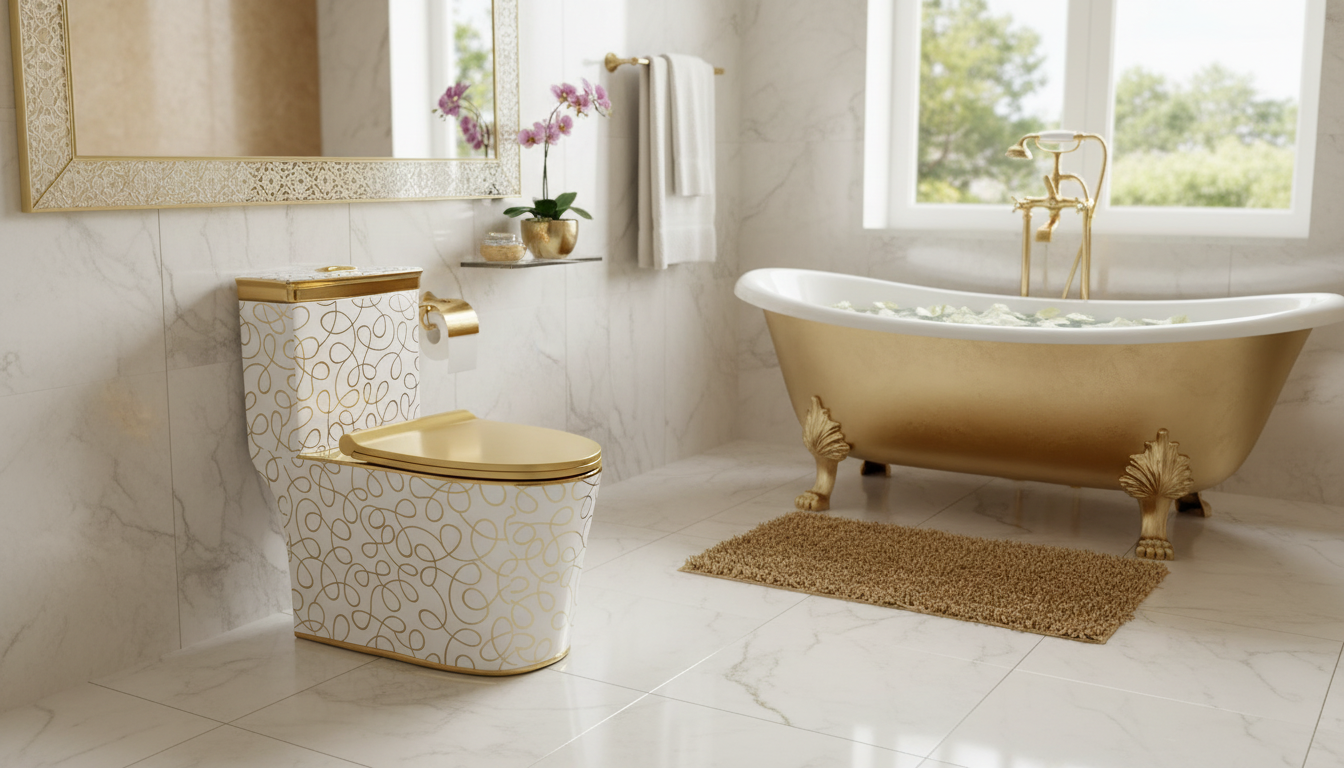
Luxurious Golden One-Piece Toilet: A Villa Bathroom Upgrade That Reads Like Custom Design
A statement toilet can elevate a villa bathroom from well-appointed to unforgettable. This golden one-piece model pairs a sculptural profile with a cyclone-style flush and an S-trap layout designed for floor outlet installations—bringing high-impact aesthetics together with everyday practicality for premium residential spaces.
For homeowners, designers, and hosts refining a luxury primary suite or creating a memorable powder room, the right toilet isn’t just a utility. It’s part of the room’s visual rhythm—finish, silhouette, and performance working together so the space feels intentional from every angle.
A bold centerpiece for villa-style bathrooms
A golden toilet isn’t subtle—and that’s exactly the point. In the right setting, it becomes a curated focal object that complements high-end materials rather than competing with them.
- Golden finish designed to complement marble, dark stone, warm woods, and brass hardware
- One-piece silhouette for a seamless, upscale look that reduces visible crevices
- Best suited for primary suites, guest powder rooms, and showcase bathrooms where design is a priority
- Pairs well with minimalist wall lighting and warm-white illumination to highlight the metallic tone
If the surrounding palette is already expressive—veined stone, architectural millwork, or layered metal accents—the one-piece form helps keep the installation looking clean and “built-in,” especially when the base sits perfectly level on finished tile.
Cyclone flush performance: clean bowl, confident rinse
Cyclone-style flushing is designed around a sweeping water motion that rinses more of the bowl surface than a basic drop flush. In practical terms, that can mean fewer second flushes during typical day-to-day use and a more consistently fresh presentation—important when the bathroom is used by guests.
- Cyclone-style water movement designed to sweep the bowl surface more evenly than a basic drop flush
- Useful for busy guest areas where consistent rinse performance matters
- Helps maintain a fresh appearance with fewer repeat flushes in typical daily use
- Consider matching with a high-quality shutoff valve and properly sized supply line to support stable water delivery
What to expect from a cyclone-style flush
| Feature | Why it matters in a villa bathroom |
|---|---|
| Swirling rinse pattern | Better bowl coverage helps keep the finish looking pristine |
| Fast evacuation | Reduces lingering waste and improves guest experience |
| One-piece bowl geometry | Streamlined surfaces make post-cleaning wipe-down easier |
| Stable water supply setup | Consistent pressure supports reliable rinse and trap refill |
For performance context and efficiency considerations, the EPA’s guidance on modern toilets is a helpful baseline: EPA WaterSense — Toilets.
S-trap layout: confirming floor outlet compatibility
S-trap toilets typically connect to a floor drain, which is common in many regions and in certain renovation layouts. Before ordering, it’s worth treating compatibility as a mini checklist: outlet location, rough-in, and the condition of the existing flange and subfloor.
- S-trap toilets typically connect to a floor drain (common in many regions and renovation layouts)
- Before ordering, confirm rough-in measurements and outlet location to avoid installation surprises
- Check flooring thickness (tile + underlayment) and flange condition; luxury installations benefit from a level, reinforced base
- For remodels, verify that the existing waste pipe alignment supports an S-trap configuration without stress on the joint
If you’re measuring a space that has been retiled or re-leveled, rough-in can shift visually even when the drain hasn’t moved. For straightforward measurement guidance, this reference can help: American Standard — Toilet Rough-In Dimensions.
Materials and finish care for a lasting gold look
A metallic finish looks its best when it’s protected from micro-scratches and mineral spotting. The goal is a gentle routine that preserves shine without slowly dulling the surface over time.
- Use non-abrasive cloths and pH-neutral cleaners to preserve the shine and prevent micro-scratches
- Avoid harsh acids, gritty powders, and aggressive scouring pads that can dull metallic finishes
- Wipe water spots regularly in hard-water areas; consider a whole-home softener for premium fixtures
- Maintain a consistent cleaning routine to keep the golden surface photo-ready for years
In hard-water homes, drying after cleaning (or after splashes around the base) can make a visible difference. If mineral scale becomes an issue, addressing water quality can be more effective than escalating to stronger chemicals.
Installation checklist for a premium result
For code and standards context, installers and renovators often reference organizations like IAPMO when aligning materials and methods with recognized plumbing practices.
Styling ideas: coordinating with luxury fixtures and layouts
Product picks: luxury toilet options in stock
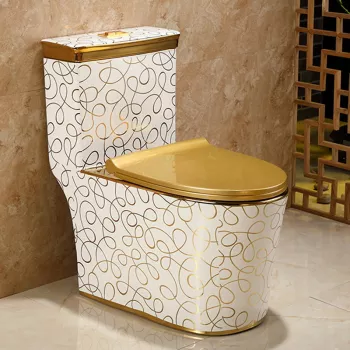
- Luxurious Golden One-Piece Cyclone Flush S-Trap Toilet for Villa Bathrooms — Sculptural one-piece profile with a cyclone-style rinse and floor-outlet S-trap layout.
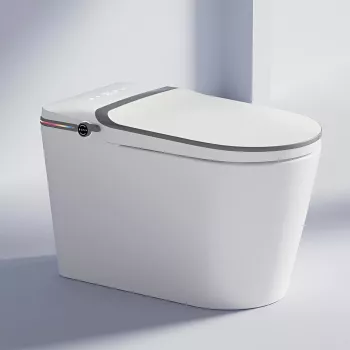
- Smart Automatic Flush Porcelain Bidet Toilet Bowl with Heated Seat — A comfort-forward upgrade with integrated washing features and a heated seat for daily-use suites.
When a smart bidet toilet may be the better upgrade
Maintenance and troubleshooting basics
FAQ
What is an S-trap toilet and how is it different from a P-trap?
An S-trap toilet typically routes waste down through the floor, while a P-trap toilet commonly exits through the wall. Confirm your drain outlet location and rough-in measurements before purchasing to ensure the trap configuration matches your plumbing layout.
How should a golden-finish toilet be cleaned without damaging the surface?
Use pH-neutral, non-abrasive cleaners and a soft microfiber cloth to preserve shine and reduce micro-scratches. Avoid acidic cleaners, gritty powders, and scouring pads, and wipe away hard-water spots regularly to keep the finish looking crisp.
Does a cyclone-style flush help reduce repeat flushing?
It can, because the swirling rinse pattern is designed to cover more of the bowl surface than a basic drop flush. Results still depend on stable water supply pressure, correct fill settings, and a proper installation that supports consistent delivery.












Leave a comment