AI Pet Enrichment Checklist: Smart Games for Every Pet
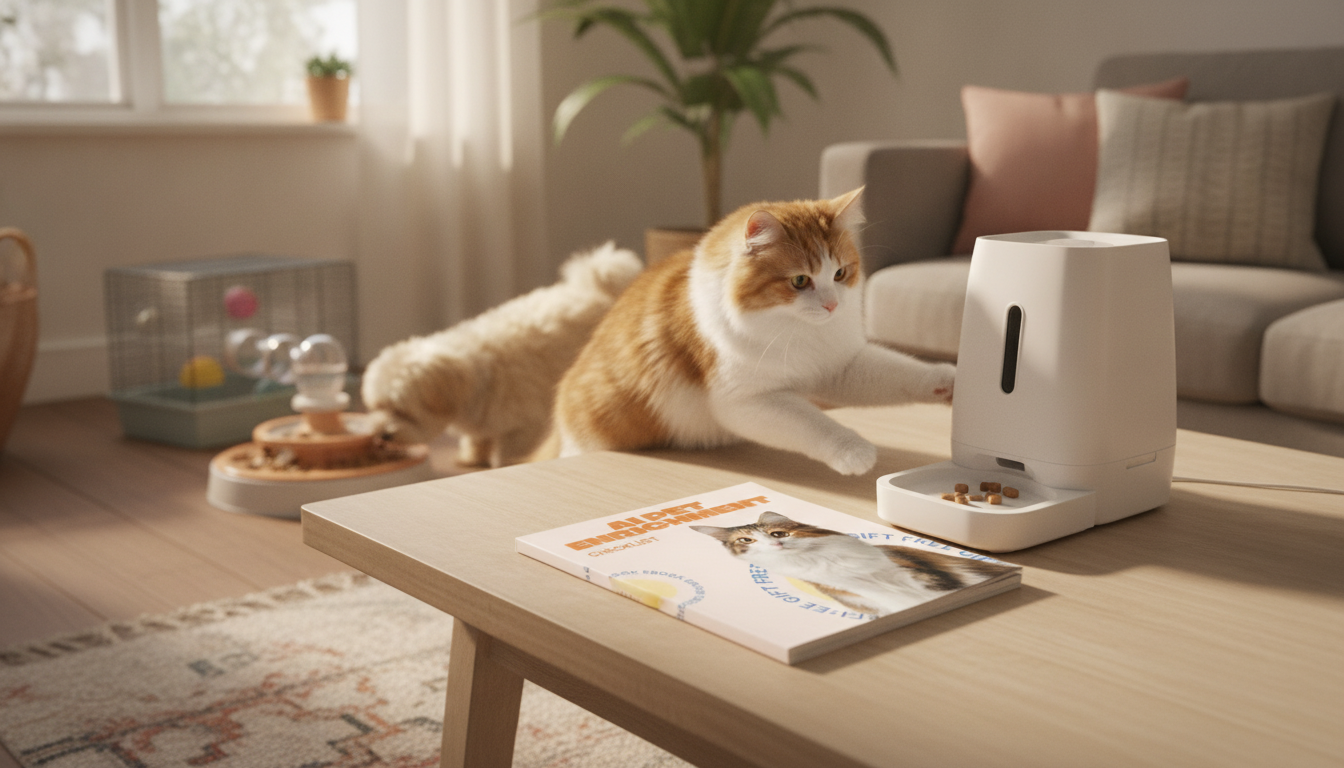
AI Pet Enrichment Checklist: Smart Play and Training Ideas for Cats, Dogs, and Small Pets
A practical enrichment routine reduces boredom, supports healthy behavior, and makes training easier. This checklist-style guide organizes mental, physical, sensory, and social activities into quick daily options and longer weekly sessions, with tips for using AI-assisted planning to rotate games, track progress, and tailor difficulty for cats, dogs, and small pets.
For a helpful baseline on why enrichment matters, see the AVMA guidance on enrichment and the ASPCA DIY enrichment ideas.
What “enrichment” means (and what it is not)
Enrichment is structured variety that lets pets perform natural behaviors: foraging, sniffing, chasing, climbing, chewing, burrowing, problem-solving, and social bonding. Think “needs met in interesting ways,” not nonstop entertainment.
- Enrichment is not constant stimulation; rest and predictable downtime are part of a healthy routine.
- Best results come from rotating activities (novelty) while keeping rules consistent (clarity).
- A balanced plan includes: mental work, physical movement, sensory inputs, social connection, and choice/control.
Quick setup: a 10-minute enrichment audit
- Space check: Identify 2–3 “zones” (play zone, calm zone, training zone) and remove obvious hazards (loose strings, unstable shelves, small swallowable parts).
- Health check: Match activity to age and condition (puppies/kittens, seniors, brachycephalic breeds, arthritis, post-op restrictions). When unsure, confirm with a veterinarian.
- Motivators list: Rank top rewards (treats, toy types, tug, chase, affection, sniffing time, perch time) to power training and games.
- Behavior goals: Choose 1–2 outcomes to focus on for two weeks (less chewing, calmer greetings, reduced night zoomies, more confidence with carriers).
The AI-assisted enrichment checklist (use it as a weekly rotation)
A simple rhythm works well: pick 1–2 activities per day, keep sessions short, and end while your pet is still successful. Then rotate the menu so it stays interesting without becoming chaotic.
Core checklist categories
- Mental enrichment: Puzzle feeders, scatter feeding, hide-and-seek with food/toys, “find it” scent games, simple shaping sessions (1–3 minutes).
- Physical enrichment: Species-appropriate movement (short sprints, leash walks, climbing routes, controlled tug), plus warm-up/cool-down for dogs.
- Sensory enrichment: Sniff walks, new textures under paws, safe herbs (catnip/silvervine for cats), sound desensitization at low volume, window perches and visual stimulation.
- Social enrichment: Cooperative play, calm handling practice, consent-based petting, parallel play for multi-pet homes, short training sessions that end before frustration.
- Choice and control: Allow opt-outs; offer two toy options; teach “go to mat,” “touch,” and “all done” to reduce stress.
How AI helps your routine stay consistent
- Generate a 7-day rotation from your existing inventory (toys, treats, space).
- Scale difficulty (easy/medium/hard) so the same game grows with your pet.
- Log what worked, what fizzled, and what caused frustration.
- Flag repetition so activities stay fresh without buying new items constantly.
Weekly rotation example (mix 1–2 items per day)
| Day | Mental | Physical | Sensory | Social/Training |
|---|---|---|---|---|
| Mon | Scatter feed or puzzle | Short walk or wand play | Sniff spot or window time | 1–2 cues: sit/target |
| Tue | Hide-and-seek treats | Tug or fetch intervals | New texture/box setup | Calm handling practice |
| Wed | Shaping: touch a marker | Climb/obstacle route | Scent swap (safe item) | Settle on mat |
| Thu | Food toy frozen/slow | Decompression stroll | Sound at low volume | Recall or name game |
| Fri | Find-the-toy game | Chase game (controlled) | Outdoor sit-and-watch | Loose leash or carrier work |
| Sat | New puzzle or rotate toys | Longer play session | Novel safe chew/forage | Trick: spin/paw/high five |
| Sun | Easy win replay | Gentle movement | Quiet enrichment (lick mat) | Review + rest |
Cat enrichment ideas (indoor-friendly, high payoff)
- Hunt cycle routine: Play (stalk/chase) → catch (toy capture) → eat (small meal) → groom/rest (calm-down). This sequence reduces “post-play chaos” for many cats.
- Vertical territory: Add a perch, shelf path, or cat tree; rotate perch locations to refresh interest.
- Foraging upgrades: Treat balls, muffin-tin “paw fishing,” kibble toss down a hallway, paper bags/boxes as hunt zones.
- Training mini-sessions: Target to hand, station on mat, carrier entry for treats, nail-trim desensitization with tiny steps.
- Social confidence: Short play with humans, avoid forced handling, and use consent cues (pause and see if the cat re-engages).
Dog enrichment ideas (smart play that builds skills)
For behavior-supportive training perspectives and humane handling principles, the IAABC resources can be a useful reference point.
Small pet enrichment ideas (rabbits, guinea pigs, hamsters, birds)
Safety and troubleshooting (keep enrichment from becoming a problem)
Printable routine: checklist + prompts for AI-generated activity plans
Helpful products to support a consistent rotation
- AI Pet Enrichment Checklist | Smart Play & Training Guide | ai pet enrichment ideas for Cats, Dogs & Small Pets (digital guide)
- AI Pet Enrichment Checklist | Smart Play & Training Guide (quick reference link for repeat use)
- Women’s Soft PU Leather Rivet Backpack Large Fashion Daypack (easy carry for a training pouch, treats, and a toy during walks or outings)
- Shifting Seasons: Inspiring Quotes That Spark Life-Changing Moments | eBook (a simple way to stay consistent when building new routines)
FAQ
How much enrichment does a pet need each day?
Most pets do best with a few short sessions (about 2–10 minutes each) spread through the day, plus one longer session when your schedule allows. Total time varies by species, age, and health, but consistency and rotation usually matter more than maximizing minutes.
What are signs my pet is bored or under-stimulated?
Common signs include destructive chewing/scratching, pacing, excessive vocalization, constant attention-seeking, scavenging, and restless sleep. If behavior changes are sudden or intense, rule out medical causes with a veterinarian before assuming it’s boredom.
Can enrichment replace walks or training?
Enrichment complements exercise and training rather than replacing them. For dogs, sniff games and food puzzles can reduce the “need” for high-intensity play, but most dogs still benefit from appropriate movement, skill-building, and safe social exposure tailored to their health and behavior.














Leave a comment