15-Minute Daily Goals Checklist to Stay Focused at Work
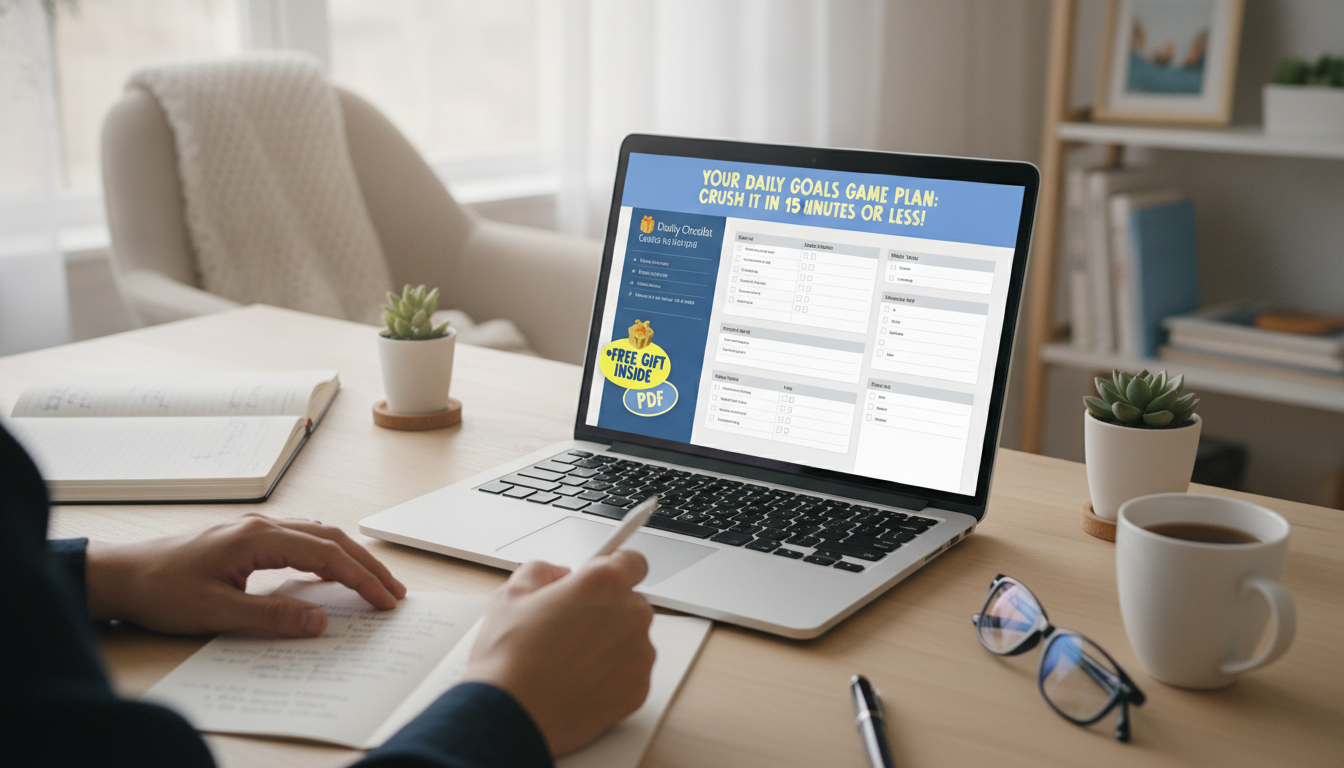
Your Daily Goals Game Plan: A 15‑Minute Printable Checklist to Stay Focused at Work
Busy days can feel productive without actually moving the needle. A short, repeatable planning routine makes priorities obvious, protects focus time, and turns vague to‑dos into finished outcomes. This printable daily checklist is designed to set a clear work plan in about 15 minutes, with goal examples that make it easy to start immediately.
What this 15‑minute game plan is (and what it replaces)
This is a one‑page, print‑and‑use daily checklist that guides planning, execution, and wrap‑up—without needing a new app or a complicated system. It replaces reactive task lists, scattered notes, and the habit of starting the day by checking messages (which often hands your priorities to someone else).
The structure is simple: choose a small number of outcomes that matter, define what “done” looks like, then back into the next actions that get you there. It works for office roles, remote work, freelancers, students with focused work blocks, and anyone managing multiple priorities.
If you like the clarity of paper planning, the main download is Your Daily Goals Game Plan: Crush It in 15 Minutes or Less (Printable Daily Checklist).
How to use the checklist in 15 minutes or less
The goal isn’t to create the perfect plan—it’s to create a usable plan you’ll actually follow. Keep it short, specific, and realistic.
Minute 1–3: Identify today’s main outcomes
Limit to 1–3 outcomes and define what “done” looks like. Outcomes should be finish lines, not activities (for example: “Send draft v2 for review,” not “Work on draft”).
Minute 4–7: Pick next actions for each outcome
Write next actions small enough to start in under five minutes. This removes friction and makes it easier to begin even when energy is low.
Minute 8–10: Block time for focus work
Schedule at least one uninterrupted session. If your calendar is meeting-heavy, protect even 30 minutes—then guard it like a meeting with your most important client.
Minute 11–13: Note constraints and decide what gets deferred
List meetings, deadlines, or likely interruptions. Then choose what can wait so urgent noise doesn’t crowd out important progress.
Minute 14–15: Choose a first task and a quick win
Pick the first task you’ll start with and identify one quick win (a small action that builds momentum and reduces mental clutter).
| Time | Prompt | Result |
|---|---|---|
| 1–3 min | What are the 1–3 outcomes that matter today? | Clear priorities |
| 4–7 min | What are the next actions for each outcome? | Actionable task list |
| 8–10 min | When will focused work happen? | Protected focus block |
| 11–13 min | What could derail the day and what gets deferred? | Fewer interruptions |
| 14–15 min | What starts first and what’s the quick win? | Fast, confident start |
Daily work goals examples (copy, adapt, and go)
If goal-setting feels abstract, borrow a few of these and tailor them to your role. The key is making the finish line measurable so you can clearly mark “done.”
- Admin: “Process 20 invoices by 2 PM” or “Inbox to zero for messages older than 48 hours.”
- Sales: “Follow up with 12 warm leads” and “Book 2 demos by Friday (today: send 6 invites).”
- Project work: “Finalize draft v2 and send for review” with next actions like outlining, writing 30 minutes, and compiling sources.
- Management: “Complete 2 performance check‑ins” and “Prep agenda + decisions needed for tomorrow’s standup.”
- Creative: “Produce first cut of 60‑second video” with next actions: script, record VO, assemble rough timeline.
- Operations/Support: “Close 15 tickets with SLA risk first” and “Update the top 3 recurring issue macros.”
For a practical foundation on how small improvements compound, see Atomic Habits — The 1% Rule. For definitions and context around goal-setting, the APA Dictionary of Psychology — Goal Setting is a helpful reference.
Make the plan stick: simple rules that protect your day
Printable vs. digital planning: when paper wins
Who this checklist helps most (and how to tailor it)
Get the printable: Your Daily Goals Game Plan
If a one-page daily routine sounds like the missing link between “busy” and “finished,” the Your Daily Goals Game Plan is a digital printable download designed to plan the workday quickly and consistently. It includes daily work goals examples to remove guesswork and speed up setup. For best results, print multiple copies or keep a small stack ready. Price: $2.99.
- Women’s Soft PU Leather Rivet Backpack Large Fashion Daypack for carrying a simple paper-planning setup (notebook, printables, pens) between home, office, and coworking spaces.
- Shifting Seasons: Inspiring Quotes That Spark Life-Changing Moments (eBook) for a quick reset when motivation dips midweek.
FAQ
How many goals should be on a daily work checklist?
Aim for 1–3 outcomes, plus a short list of next actions. Keeping goals few and specific reduces overwhelm and makes it easier to finish what matters instead of juggling too many priorities.
What if the day gets derailed by meetings or urgent requests?
Use a buffer block, then re-select the single top outcome you can still complete. During your wrap-up, convert unfinished items into clear “next actions for tomorrow” so they don’t linger as vague stress.
Should the checklist be filled out in the morning or the night before?
Either works: choose tomorrow’s first task the night before, then spend 10–15 minutes in the morning finalizing based on new information. This keeps momentum high while still allowing flexibility.
















Leave a comment